Dr. Gymbro
←

#new zealand blackcurrant

1 article
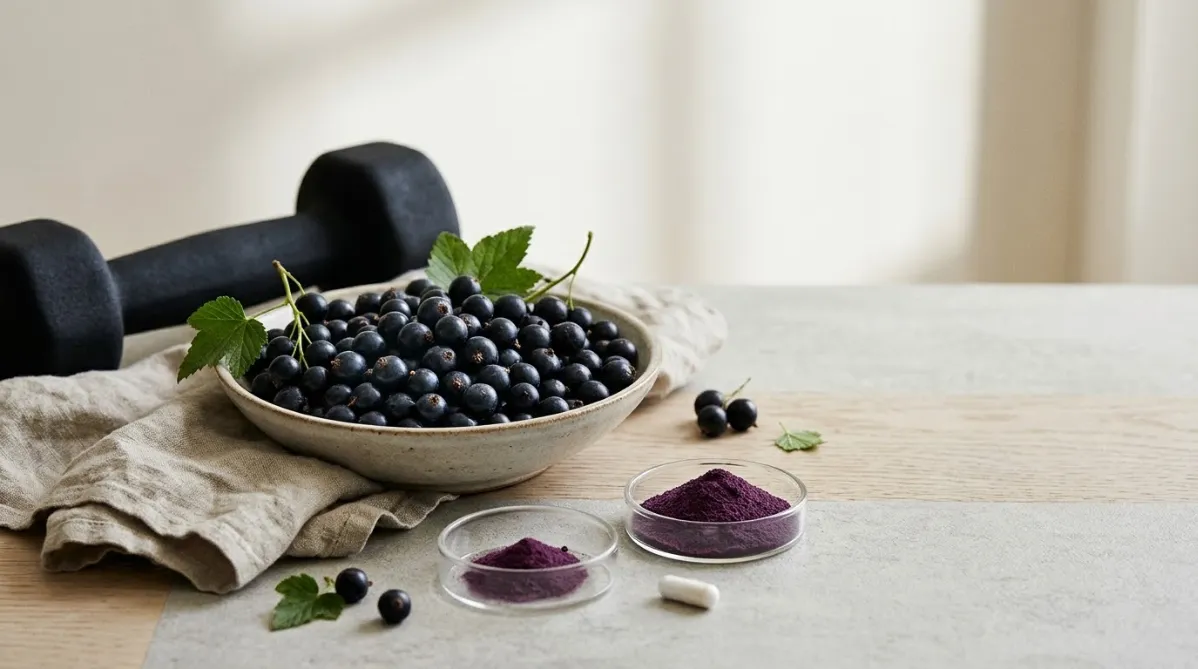
A wide, editorial-style still life photographed in soft natural window light on a pale oak or light grey concrete surface. In the center-left, a shallow ceramic bowl filled with plump, dusky blue-black blackcurrants, some with tiny glossy highlights and a few still attached to slender green stems with serrated leaves. Beside the bowl, a matte black dumbbell handle rests diagonally, partially in frame and slightly out of focus, suggesting strength training without a gym setting. In the foreground, two small minimalist glass dishes sit side by side: one holds a small pile of deep purple powder, the other a larger pile, a subtle visual nod to the low versus high dose. A few scattered berries add a natural touch. A folded linen cloth in muted oatmeal tone adds texture, and a single white capsule sits near the dishes for scale.

The background is a soft, creamy off-white wall with gentle shadow gradients from the window, leaving generous negative space on the right third of the frame for title overlay. The color palette is restrained and modern: deep indigo and violet from the berries, warm neutral beige, charcoal black, and touches of fresh leaf green. Shallow depth of field, crisp focus on the berries in the foreground, subtle film grain, and a calm, refined, contemporary magazine aesthetic like a wellness or sports science journal cover. Overhead angle tilted slightly to about 35 degrees, balanced composition, clean and uncluttered, with natural soft shadows and a premium, quietly athletic mood.
nutrition

Blackcurrant for Lifters: Why the Low Dose Beat the High Dose

BY DR. GYMBRO ·

A one-week blackcurrant supplement raised bench press 1RM in resistance-trained lifters, and the smaller 250 mg dose often matched or beat the 600 mg dose. The high dose boosted bench power by nearly 80 W against placebo, and the low dose improved Stroop cognitive scores. But the placebo also beat the no-capsule control on leg press, so those eye-catching gains need careful reading. With just 20 participants and a seven-day window, this is a promising signal rather than a proven strength aid. Here is what held up, what didn't, and who might want to try it.

This page is available in